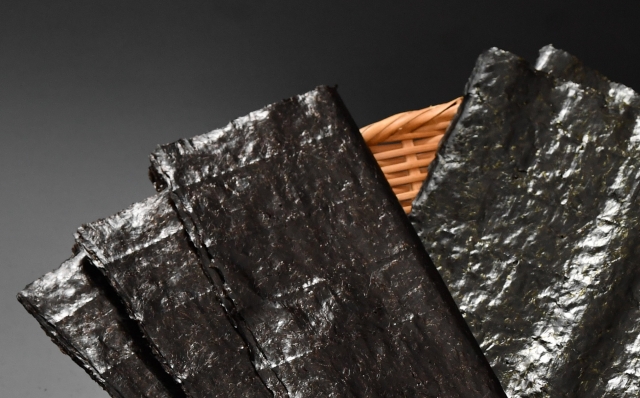
As I told you before, I know that most foreigners don’t like seaweed. Even so, I strongly recommend seaweed, especially Nori. As I am a seaweed person, I like all kinds of seaweed that each of which has a unique taste. Among them, Nori’s deliciousness is superior, I believe.
The science of Nori First of all, seaweed contains huge Umami(=the essence of deliciousness. This page explains it.). It can make all kinds of food better. The scientific explanation is that Nori is a miracle food that contains 3 ”umami” components, glutamic acid,(umami of plant food like tomato), inosinic acid(umami of animal protein like meat and fish), and guanylic acid(umami of mushroom). It is said that these 3 components create synergistic effects.
*As you can see in this illustration, each food mostly contains 1 or 2 Umami components except Nori. It does 3 components. (cited from this page). *
For pasta, salads, ramen, rice, and bread, almost everything fits perfectly. It takes the taste experience to the next level. The taste of seaweed is not too strong, but something profound.
Nori is the fundamental of a Japanese meal. From Onigiri to potato chips, Nori is everywhere in Japan. Among them, the big 3 are Onigiri, Sushi, and Nori-ben(Nori lunch box). Assuming you know about Sushi, what about Noriben? Noriben is the lunch box with NorI over rice. Sometimes you place the side dishes like grilled salmon on top of the Nori and rice, sometimes not. Also, the rice under Nori is often mixed with Katsuobushi(dried fish flake). When you make Noriben, you drizzle a little soy sauce on the Nori before putting it on rice.
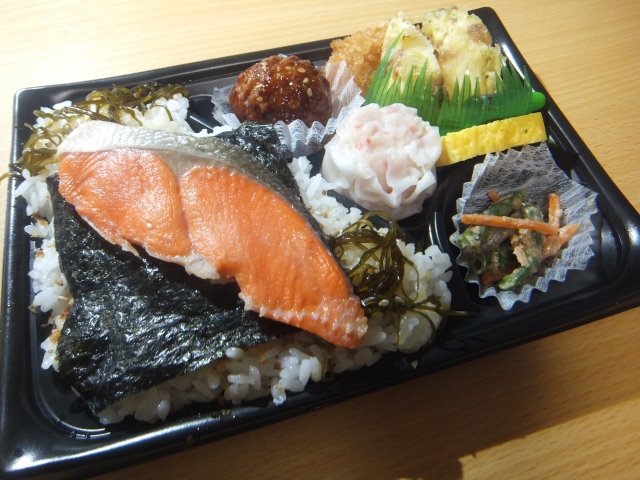
Sometime you put dishs on top of Nori rice.
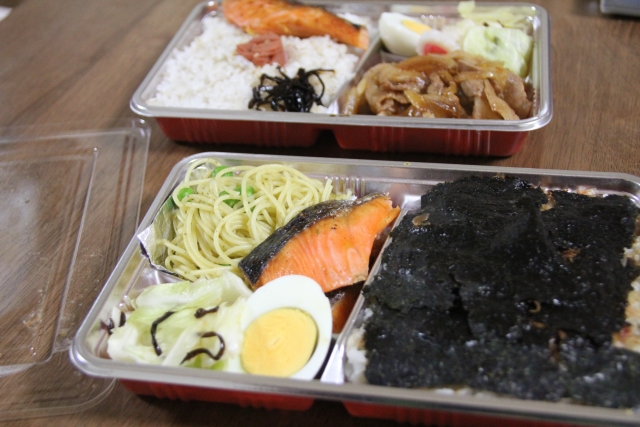
Sometime not. only Nori.
Although Noriben is a traditional lunch box style, there is a re-emergence of it. The video shows the Noriben trend nowadays. You can see the up-to-date Noriben. The title is “New Noriben specialty stores are appearing one after another. Some of them are so luxurious.”
https://www.youtube.com/watch?v=EJkgZaL8xvA&ab_channel=TBSNEWSDIGPoweredbyJNN
2 different ways to taste Onigiri in Japan. In the same context, do you know there is 2different type of Nori-onigiri? They are Temaki and Jikamaki.
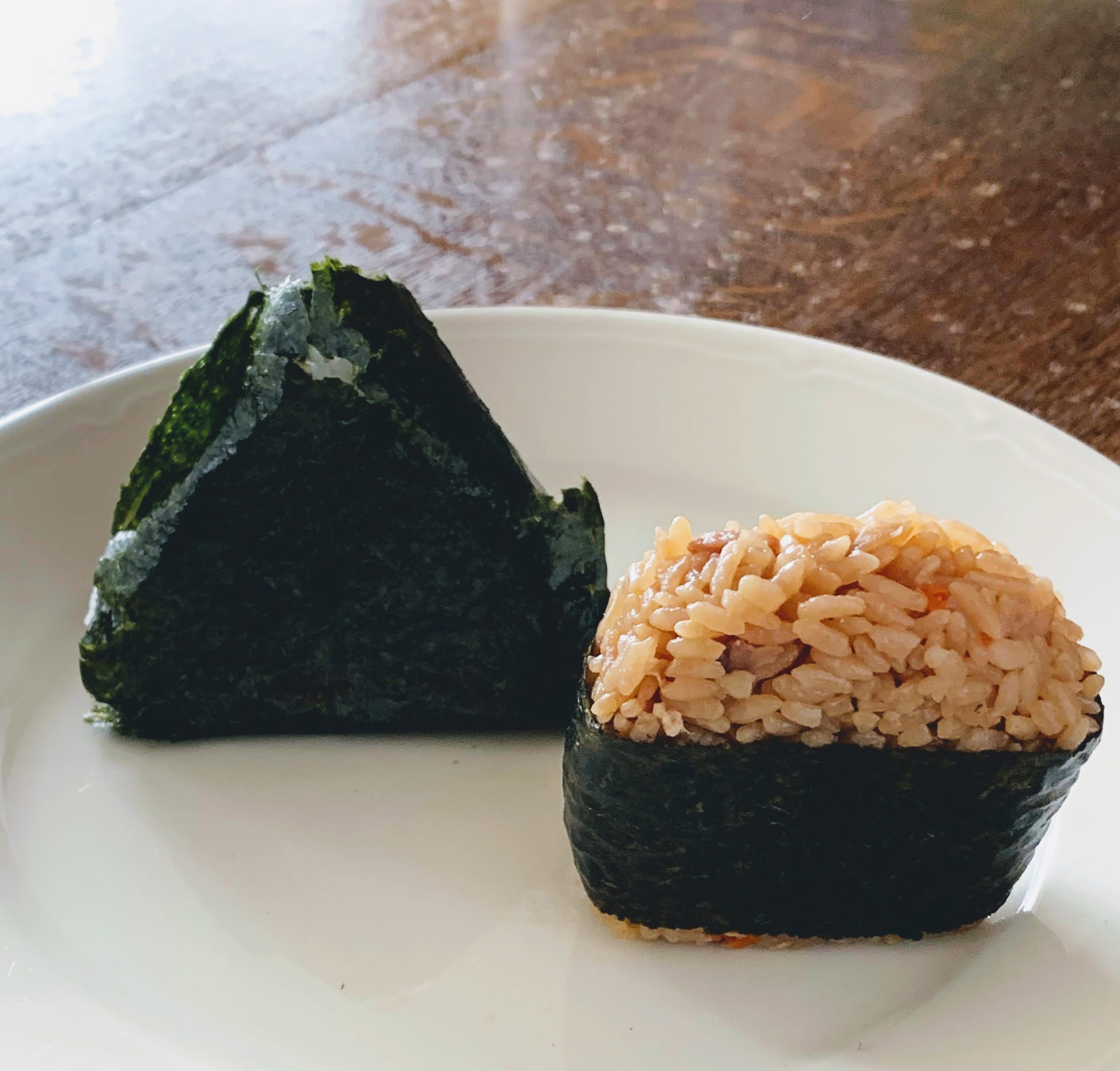
The right of the picture is Temaki, and the left is Jikamaki.
Temaki is the Onigiri you wrap with Nori by yourself just before eating. Nori is separated from rice in a package(this is a great system. I will show you how to wrap it in the following video). Jikamaki is the one that Nori has already wrapped in advance. What’s the difference? As you can see in the above picture, the state of Nori is completely different. Temaki’s Nori is dry and crispy. Jikamaki’s Nori is soft and wet because Nori absorbs moisture from the rice. I think both are tasty. But it depends on the person. When I was a high school frog, I argued with my mates about which is better Temaki and Jikamaki. All my friends but me strongly preferred Temaki. They said that because Nori has become damp! They hate it!! I countered but wasn’t accepted.

When I was a high school frog…
However, the good thing about Noriben and Jikamaki-Onigiri is precisely this damped Nori. The softness of Nori becomes one with the rice. After all, both have their good points. Please try and compare the two.
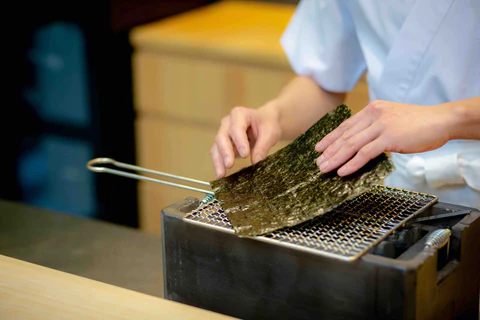
But, this is definitely true that in Nori, dryness is the important thing. Once you decide to eat crispy Nori, it should be dried perfectly. As it’s easily moistened, you must roast Nori just before eating as follows. This is a scene of a Sushi restaurant.↓
Borrowed from this site.
Also, please reffer to the vide below if you need it.